

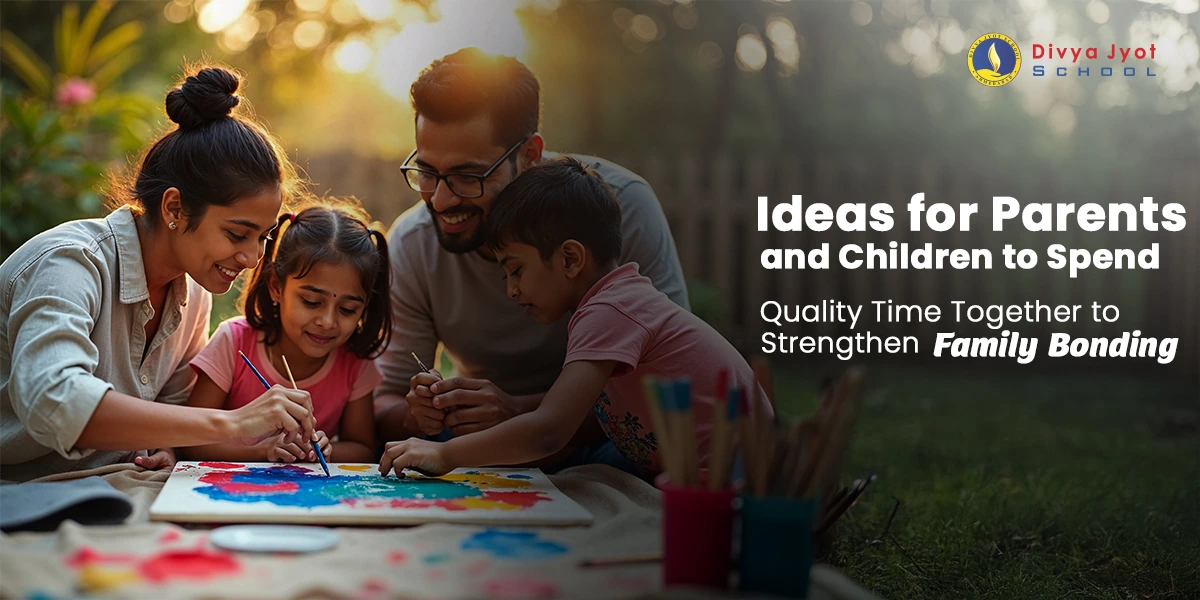
The most significant impact on child development is the family. However, in our time, real contact is frequently lost in favor of time and timepieces. Research indicates that adults are spending hours daily using devices, which are slowly destroying family relationships.
The break is appearing quietly- kids might seem less social or even distracted always. To the educators, we requested them to give practical examples of how families can reconnect with the time they have already.
The family bonding activities we’ve gathered are designed to turn ordinary moments into meaningful ones. As exams have ended and a vacation is imminent, this would be the right place to be. Such moments are not only a time-filler, by sharing these moments you are solidifying your child to get back to school and help him or her feel refreshed.
What Is Quality Time?
Quality time implies that you are all there: take a moment to listen, interact and get to know what your child thinks and feels. This is a close-range engagement that gives a child a sense of importance and safety.
You do not even have to go away. Connection occurs in the daily activity: conversation in the car, doing a chore, or reading at bedtime. Your attention is what is of less importance than the activity.
Of course, planned time together also counts. A family walk, a dance party in the living room, or a board game night all create space for positive interaction with parents. It must be regular, make it a habit.
Quality Time vs. Quantity Time
Being with someone does not mean being connected. Quality time is a participatory decision to listen and be present, rather than the mere presence. Such a conscious communication creates emotional safety in a child.
Simply being next to one another is not very helpful. The important thing is what you do with that time; hearing ideas, reacting to emotions and age and interests and adjusting activities to their age and interests. The result of that concentration is social and cognitive development.
The core of this difference is communication for happiness. It’s the back-and-forth exchange—laughter, questions, shared stories—that strengthens your bond. Putting these productive encounters, even in minor daily doses, ahead of such extended intervals of non-interaction, is more important than making use of coexistence.
Family Activities for Stronger Bonds
Establish better ties with these useful activities, fun things that can be incorporated into everyday routines as well as making memorable togetherness.
1. Purposeful Play Sessions
Pass out of just playing around and select activities that will develop certain skills. For structured fun, try these indoor games for 6-12 year olds:
- Board games such as Settlers of Catan Junior.
- LEGO or block building during a certain time frame.
- Puzzle and memory card games.
Such activities instinctively instruct turn taking and attention, which go directly to instruction on how to enhance child concentration and generate generalized laughter and connection.
2. Homework Support Rituals
Make homework more interactive and less a burden by:
- Establishing a systematic, shared working environment.
- When your child explains things to you in the process of studying and teaching.
- Praising small achievements and improvement instead of final grades only.
3. Dedicated Listening Time
Take 15 consecutive minutes a day in which you:
- Look in the eyes and no distraction of means of devices.
- Reflective listening (it sounds like you felt)
- Ask open-ended questions on their day other than how was school?
4. Tech-Free Family Meals
Have one meal each day by the following rules:
- All devices in another room
- Every individual mentions something good that happened to him or her during the day.
- Involve children in basic meal making.
5. Collaborative Routine Building
Prepare visual schedules collaboratively that comprise:
- Regular wake and sleep schedules.
- Allocated homework and play time.
- Family determined screen time limits.
6. Adventure Planning
Plan your trip as a family project by:
- Children research on the destination and present their findings.
- Delegation of packing duties with age.
- Coming up with a joint journal of vacation events or a photo album.
The Measurable Impact of Quality Time
Regular and close time spent with your child is giving you undisputed positive gains in various fields that are important in your child. These consequences prove that purposeful communication with parents is an essential investment, and not a luxury.
Enhancing Academic Performance
Your interaction is directly related to classroom learning. You do more than assisting in answers when you talk about the school projects or do the homework together. You are the role model in problem solving and demonstrate that learning is not about grades. Such an encouraging climate creates the academic strength and mental drive of a child to achieve.
Building Emotional Well-being
Security is created by regular association. Quality time serves as a source of emotional anchor, which provides children with a solid platform against which they can cluster their difficulties. With this sense of safety with parents, the children usually have a higher level of self-esteem and better coping skills during stress or failures.
Strengthening Foundational Bonds
The family is the initial pattern of all the relationships that a child has. The common past and the feeling of us are formed by the shared activities and routines. This strengthened attachment creates a nurturing atmosphere, in which children feel secure to develop, take the right risks, and achieve their own distinct identity, knowing that they can be supported at all times.
Conclusion
At Divya Jyot School, recognized as the best preschool in Ahmedabad, we view education as a partnership. We see firsthand how a child’s learning is amplified when supported by consistent, positive engagement at home.
Their early development is based on your active participation. These early developmental years develop the needed structure of all learning yet to come through the communication skills, emotional security, and curiosity. This essential work is simple, even everyday.
Such moments of association are the best learning material of your child. This is an intentional time that we invite every family to invest in. Together, we can ensure each child flourishes, building the confidence and foundation they need to thrive both in our classrooms and beyond.