
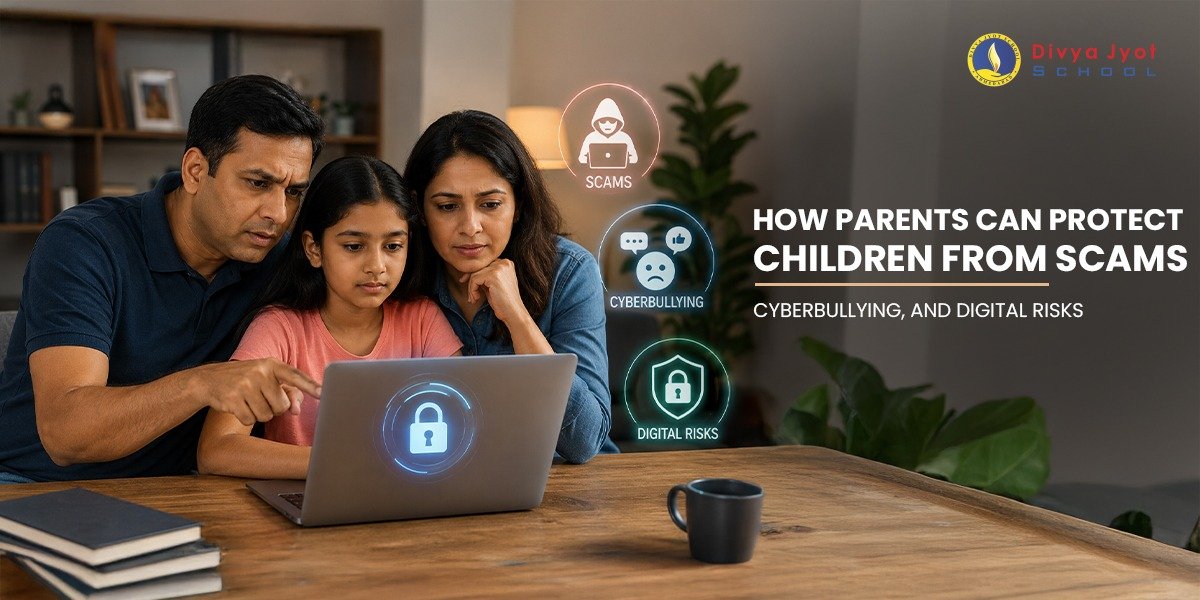
The internet has become part of every child’s daily life in India. It powers their homework, fills their free time, and connects them with friends. But that same connectivity comes with risks that did not exist a generation ago. Scams designed to trap children, strangers hiding behind fake profiles, bullies who follow kids home through their phone screens, and content that no child should ever encounter.
According to UNICEF’s 2024 report, over 40 percent of young people in India spend more than four hours online every day. That is four hours of exposure to a digital world that moves faster than most parents can track.
The good news is that awareness is protection. When parents understand the risks and take the right steps, they can give their children the freedom to explore the internet safely without fear.
The Digital Risks Children Face Today
Parents must know what they are protecting their children from before they do anything. There are current, diverse, and escalating threats.
Cyberbullying in schools
Schools have emerged as one of the most pervasive digital threats for children in India, with cyberbullying being one. It is not as though the playground bullying stops after school hours. Children follow abusive messages, humiliating posts, and group exclusion into their homes via their devices. The emotional consequence can be profound, with anxiety, social isolation, and poor schooling performance all being affected.
Online scams
Children are the target of evolving online scams. Children are enticed to provide personal and/or financial information through fake lottery wins, gaming rewards, gift vouchers, and discount websites. Children often willingly provide their parents’ banking information or involve their families in greater frauds without knowing the full extent of the situation.
Online stranger danger
One of the biggest concerns is online stranger danger. Predators “friend” children over a period of time via fake accounts on gaming sites, social media, and chat rooms in order to gain their trust, which is then used in a harmful manner.
Inappropriate content
Violent content, extremist content, and images inappropriate for the age are just a click away, even on platforms geared to children.
Cyber Safety for Students: What Every Parent Must Do
You don’t need to ‘ban’ the internet; it’s about protecting your child from it. It’s about creating the right habits, engaging in the right conversations, and implementing the right tools.
Start with an open conversation
When children feel they can discuss what they view on the internet with their parents, they are far less likely to be at risk than if they do not discuss the content. Normalize talking about online experiences in the home. Inquire about the games they play, the people they talk to, and what they watch. No judgment. Just genuine interest.
The more children understand they don’t face punishment when they come to you, the quicker they will come to you when things go wrong.
Teach children what online stranger danger looks like
Kids should learn that online strangers aren’t always who they say they are. A friendly face and kind words might be of anyone’s profile. Help your child learn these rules that must be followed:
- Don’t give out your complete name, school name, address, or phone number on the Internet.
- Always avoid meeting someone online without supervision, and never agree to meet someone you don’t know personally.
- Don’t post photos/videos on social media to strangers, even if they are friendly
- If you are uncomfortable with a conversation, end it and report it right away to an adult you trust.
- If you feel uncomfortable, block and complain against anyone, even if you don’t know why.
Set clear rules around screen time and usage
Rather, rules on Internet usage are not constraints. They are structured. Children do better when they have structure, and they do better when they don’t.
- Do not leave devices in bedrooms or in common areas of the house overnight.
- Implement screen time limits for weekdays and weekends.
- If not needed, disable the location sharing feature in all the apps.
- Make sure there are open, visible places for all browsing.
Use parental controls and privacy settings
All devices and platforms have parental controls – but most parents do not use them. Spend some time setting them up.
Allow users to configure their browser to filter search results.
- Enable age-appropriate content filters on YouTube, Instagram, and other apps.
- Check your child’s friend and follower lists on a regular basis
- To use parental control apps to track screen time, block inappropriate websites, and get alerts for suspicious activity.
These are tools and not tools of mistrust. They’re concerned about making things safer until kids have the judgment to use the internet on their own.
Cyberbullying Prevention Tips for Parents
Cyberbullying prevention starts long before bullying happens. It starts with building a child who is confident enough to report it and resilient enough to handle it.
Keep an eye out for these indications of cyberbullying:
- Avoiding their phone or device in a blink of an eye
- Being unusually quiet or withdrawn after being on-line
- Developing symptoms of anxiety or distress when using social media, or after using social media
- Loss of interest in school, friends, or activities that were once of interest
- Inability to talk about online activity. Difficulty discussing online behavior.
If you believe a child or young person is being bullied online, don’t confiscate the device unless you are told to do so. This may be a punishment to the child. Rather, record the evidence first. Screenshot the messages, posts, or interactions. Report it to the platform and, in the case of threat or criminal activity, to the school and local authorities.
Children suffering from cyberbullying can also report it on the National Cyber Crime Reporting Portal on cybercrime.gov.in, which is open around the clock, every day.
Social Media Safety for Students
Social media websites are addictive! Peer validation, frequent alerts, and the culture of comparison can be quite destructive for kids if not handled well.
Social media safety for students requires both practical steps and ongoing conversations.
- Make sure to keep all social media accounts private.
- Make sure that your child never agrees to follow someone that they have not met in person.
- Talk about how things, once they are online, are online forever. Anything shared can be screenshotted and kept forever
- Let children know that the social media they see is a highlight reel and not real life.
- Check minimum age requirements. The vast majority of platforms will have age restrictions, with most demanding a minimum age of 13 years.
Remind your child to think before he posts. If they were not able to show you a post or their teacher, it shouldn’t be posted online.
Internet Safety for Kids: Building Long-Term Digital Habits
Internet safety for kids is not a one-and-done discussion. It’s a continuous practice and should expand with your child’s development. An 8-year-old’s rules and boundaries are not those that suit a 15-year-old.
During the transition to digital literacy, parents and caregivers will need to move from monitoring to a more digital approach as children grow older. Explain the reasons behind the rules. Help them examine what they view online, double-check what they see, and consider what they read and post.
Having a child who knows the internet is a lot safer than one that has merely been informed what to avoid doing.
How Divya Jyot School Supports Online Safety
In the Divya Jyot School, we feel that the issue of cyber safety for students is as important as any subject of the school timetable. We take a holistic approach to digital wellness beyond the classroom. Facilitate awareness parent by parent, share resources, and establish a school community for children that is safe both online and offline.
Students, teachers, and families are encouraged to discuss online responsible behaviors. Schools are not responsible for protecting children in the digital age, nor are parents. It is a shared one.
Final Thought
The digital world is here to stay. Our kids will live, learn, and create in it! Do not prevent them from accessing the Internet. The aim is to ensure that they are prepared for it.
Initiate discussions at an early stage. Establish limits. Keep an open mind regarding what your child is doing online. Also, keep in mind that the best thing you can do to protect your child is not to install a parental control app. It’s a relationship where they trust you enough to let you know if there’s something that doesn’t feel right.
Admissions at Divya Jyot School are open for 2026–27. Come and see our campus and see how we ensure the safety and wellbeing of all children in our community.