


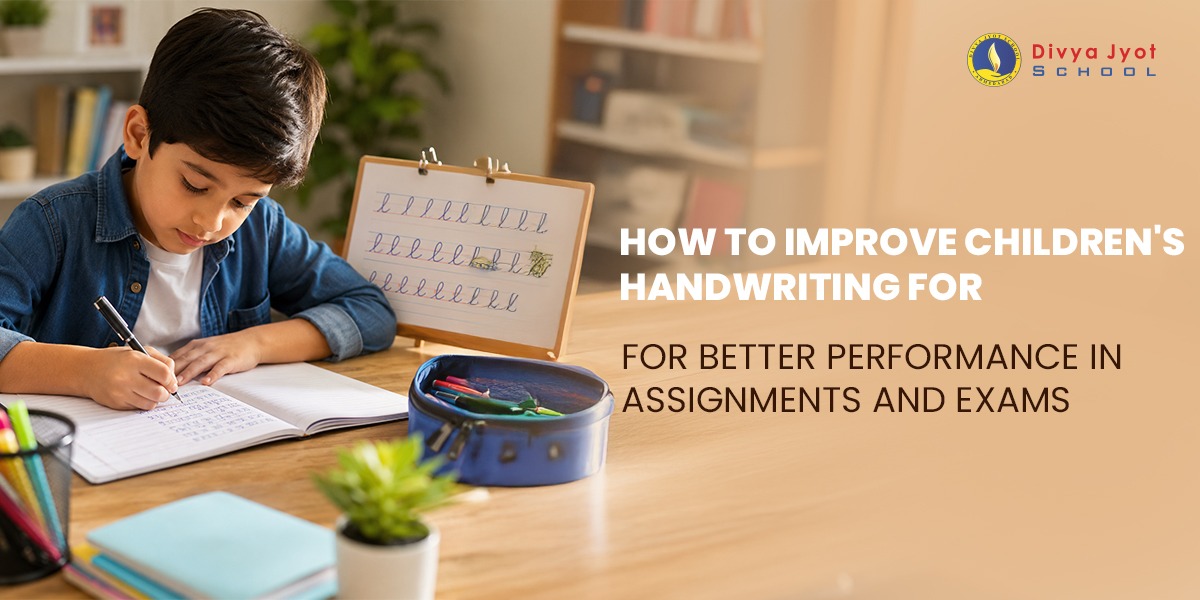
In a world moving fast toward screens and keyboards, handwriting still matters more than most parents realize. Neat, legible handwriting directly affects how teachers perceive a student’s work. It influences exam scores, assignment grades, and even a child’s own confidence when sitting down to write. A child who writes well thinks more clearly on paper. A child who struggles with handwriting often struggles to keep up, not because they lack knowledge, but because the act of writing itself gets in the way.
If your child’s handwriting needs attention, the good news is this. It is a skill. And like every skill, it can be taught, practiced, and improved with the right approach.
Why Handwriting Still Matters for Students
Many parents think that handwriting will be fine in the future. Unless it’s deliberately done, it rarely does without it. Studies have long demonstrated that handwriting stimulates areas of the brain not stimulated by typing. Handwriting helps children to remember, connect with reading, and focus during study sessions.
The handwritten system of board examinations, class tests, and daily homework in Indian schools has not changed significantly even today. It is not the child’s handwriting that marks a child down if they get the answer incorrect; it is simply that the examiner could not read what the child wrote. That’s an issue that needs to be addressed early on.
Improving children’s skill development is not just about neatness. It is about giving your child a tool that works for them when it matters most.
Common Handwriting Problems to Watch For
Identifying the real problem helps in solutions, too, before jumping into it. Typical handwriting problems that children have involve letters that are not always the same size, poor word spacing, poor alignment on the line, reverse and misshapen letters, and/or light or heavy writing on the page.
Early on many children also learn to hold the pencil awkwardly, and as they get older, they make it more difficult to fix their hold and make the pencil look more like a pencil. When you notice your child complaining about hand fatigue after a brief period of writing, it is likely that the grip is the first thing you should check.
It is easier to correct the issues early.
Start with the Right Grip and Posture
How a child holds the pencil is the first thing to look at when everything is written well. The ‘tripod grip’ (between the thumb, index finger, and middle finger) is the best for control and comfort. Too tight a grip results in a feeling of fatigue. Too loose a grip will lead to inconsistency.
The position is as important. Children’s knees should be bent, and their feet should be flat on the floor with their back straight and the paper steady in the non-writing hand. The slouching or leaning impacts hand movements across the page and makes it difficult to form the letters consistently.
Pencil grip exercises at most stationery stores can help to gently reshape your child’s hand so that it is in a better grip – without making it sound like you are punishing your child.
Use Handwriting Worksheets for Structured Practice
One of the best handwriting worksheets for kids is effective in developing consistency. They offer structured repetition and letter templates and guided lines, which are not available in free practice on blank paper. Work on single letters first, correcting letter formation, and then move to words and sentences as letters are consistent.
For younger children, three-lined practice paper is suitable. The lines give them an awareness of the height of the letters, where they rest on the line, and the difference in height of the tall letters (b, d, h) and the short letters (a, o, c).
Daily handwriting practice – even just 10-15 minutes per day – are much more successful than a single extended session once a week. Building muscle memory is a key factor in this, and muscle memory is the reason handwriting looks neat and effortless.
Cursive Handwriting Practice Builds Flow and Speed
Many parents don’t pay much attention to cursive because they think it’s outdated. It is actually true that cursive handwriting practice allows kids to write more quickly, more easily, and less tiredly than they do in print handwriting. Since letters are connected, the hand is not lifted as much from the paper, and naturally, this results in faster writing without compromising readability.
In particular, it is helpful for older children to learn cursive handwriting for their use in exams when they need to write at speed. After a child has a good foundation of print handwriting, it’s best to begin cursive between the ages of 8 and 10. Use simple and familiar letter combinations before progressing to words and sentences.
Handwriting Improvement Activities Beyond the Page
Handwriting improvement activities do not always have to involve a pencil and paper. Strengthening the small muscles in a child’s hand through play directly improves their writing control.
- The squeezing or molding of clay or playdough develops grip strength.
- Scissors cuts are good for hand-eye coordination
- Drawing, sketching, and coloring help develop the skills of using the pencil naturally.
- Tracing shapes and patterns develops line awareness before letter formation
- Practicing by writing with the sand or whiteboard helps to make it seem like less work
The activities are particularly suited to younger children who may get tired or frustrated with longer periods of extended writing. If the process is a fun activity, children will do it longer and will be less resistant.
English Handwriting Improvement for Indian Students
English handwriting improvement deserves specific attention for students in CBSE schools. English script has its own rhythm, letter connections, and spacing rules that differ from regional language scripts. Children frequently make the carryover error from one script to another, resulting in inconsistencies.
It is a good idea to incorporate regular handwriting practice (outside of homework) into your child’s weekly schedule. Use consistent letter slant, word spacing, and distinction between similar letter forms such as “u” and “v,” “m” and “n,” or “i” and “l.” These little things can have a big impact when it comes to reading and judging written answers.
Best Handwriting Techniques Teachers Recommend
The best handwriting techniques are not complicated. They are consistent. Teachers across India recommend the following practices for meaningful improvement in student writing skills.
- Always practice on lined paper until consistency is established
- Never rush. Speed comes after accuracy, not before it
- Correct letter formation from the start rather than fixing bad habits later
- Review and compare old writing samples regularly, so progress is visible
- Prompt the child to critically evaluate his/her own work with new eyes
Visible progress is one of the strongest motivators for children. A handwriting journal that displays old and new handwriting samples side-by-side demonstrates to children how much progress they have made.
How Divya Jyot School Supports Writing Development
Handwriting improvement activities and structured writing support form a part of our understanding at Divya Jyot School as a way of contributing to the development of a well-rounded student. From the early years, our teachers build regular classroom routines and focused writing practice so that children can learn good writing habits before they become ingrained in them.
Each child’s handwriting is clear, consistent, and exam-ready through a structured handwriting system, guided letter formation, and regular feedback. Writing is seen here as a worthwhile skill to invest in, since we know it appears in every subject, every assignment, and every test our students encounter.
Conclusion
Good handwriting is not a coincidence. It is created, developed, and practiced with the correct methods, the appropriate tools, and persistence over time. If your child is beginning to write or brushing up on their skills before the next round of exams, here’s what to do. Begin with grip and posture, work with structured worksheets, develop hand strength with play, and maintain a consistent but short amount of practice.
The outcome will be reported back. When they do, your child will not only write well, but they will also write better. They will become more confident with each pen.
We at Divya Jyot School are dedicated to establishing that confidence from the very beginning. We would love to hear from you and discuss how we can help your child reach his/her full potential. academic potential; please come in and talk to us about your child and any questions you may have concerning your child’s education. Admissions for 2026 to 27 are open now.